
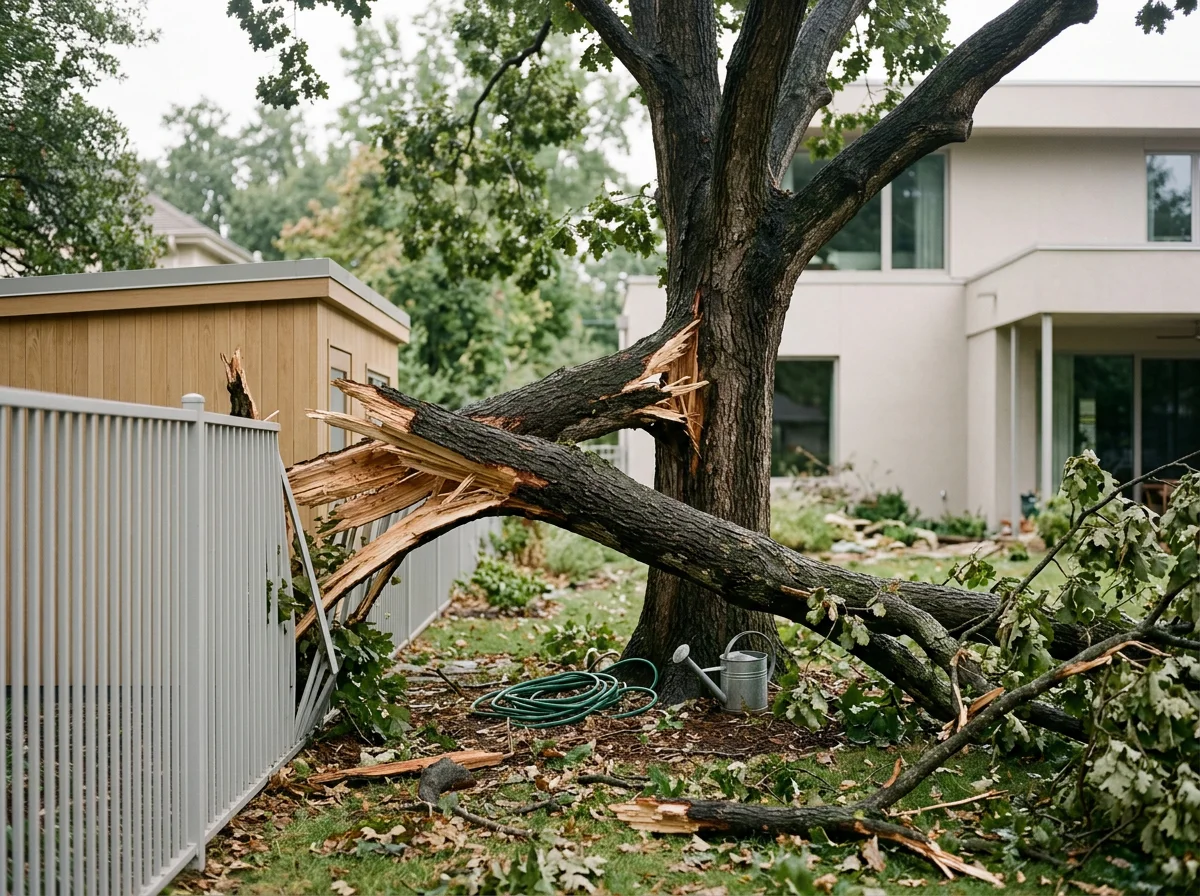
In Brown County, a November windstorm can leave more than branches on the lawn. Snow, ice, and
strong winds are ahead, and a tree weakened by a recent storm may pose a risk for weeks or even
months. Knowing what to look for, and when to stay back, can help protect your family, property, and
the trees worth saving.
This guide covers signs of storm damage, what to do right after a storm, how professionals assess a
tree, and what to know about insurance. If a tree or limb is an immediate danger, keep your distance
and call for help.
What counts as storm damage on a tree?
Some damage is obvious, like a trunk snapped in half. Other signs can be easy to overlook from the
ground. After high winds, heavy snow, or ice, check your property from a safe distance for:
• A new lean: A tree that suddenly tilts may have shifted or lost roots.
• Hanging or broken limbs: A branch caught in the canopy can fall without warning.
• A split trunk or major limb: Cracks and fresh splits can signal structural weakness.
• Root heave: Raised, cracked, or shifting soil near the base may mean the root plate has moved.
• Bark damage: A deep split or large area of torn bark can expose the trunk to further injury.
• Fallen branches or debris: Smaller breaks may point to damage higher in the canopy.
A tree can look upright and still have serious root or trunk damage. If you notice a new lean, ground
movement, a major crack, or limbs lodged overhead, treat it as a potential hazard until a qualified
tree professional has assessed it. The University of Wisconsin Extension’s storm-damage guidance explains common damage signs and recovery considerations.
What should you do immediately after a storm?
Start with safety, not cleanup. Storm-damaged wood can be unstable, heavy, and under tension. A
limb that appears settled may shift when cut or moved.
1. Keep people, pets, and vehicles away. Give damaged trees and hanging limbs a wide berth.
2. Stay clear of downed power lines. Never touch a line, a tree or branch in contact with it, or anything nearby that may be energized. Call 911 if there is an immediate threat, and contact Wisconsin Public Service at 1-800-450-7240 for downed power lines.
3. Don’t try to remove large limbs yourself. Avoid climbing, using a ladder or chainsaw, or pulling
on a lodged branch. Leave work near buildings, roads, or utilities to trained professionals.
4. Take photos from a safe distance. Document damage before cleanup if it’s safe to do so.
5. Call for a professional assessment. A trained eye can help identify hazards that aren’t obvious
from the ground.
Can a storm-damaged tree be saved?
Not every damaged tree needs to come down. The right decision depends on the tree’s stability, the
amount and location of damage, and whether it can be made safe with appropriate care.
A tree may be a candidate to retain when its trunk and main structure are sound, the damage is limited, and broken branches can be removed safely. Some trees can recover after losing smaller limbs.
But a split trunk, severe root disturbance, a major new lean, or significant damage near a target (such
as a home, driveway, or sidewalk) calls for careful professional evaluation.
A tree that has shifted at its roots or is leaning after a storm may be unstable even if it has not fallen.
Don’t try to straighten it, cut major roots, or bury disturbed roots on your own. A professional can assess the tree and recommend whether removal or another course of action is appropriate.
When safety is a concern, a qualified tree professional can explain the risks and options in plain language. Trustfall Tree Service’s licensed tree technicians serve Brown County, and we work in line with
applicable local ordinances. Learn more about our tree removal services.
How does emergency tree removal work?
Every site is different, but professional storm response generally starts with assessing the hazards and
deciding how to make the area safe. If a tree or limb is tangled with power lines, the utility company
must address the electrical hazard before tree work can proceed.
Once the work area is safe, a tree crew can plan how to remove damaged wood while limiting risk to
nearby structures and landscaping. Depending on the tree and its location, that may involve section-
ing branches and trunk into manageable pieces or using specialized equipment. Afterward, the crew
can clear debris and discuss any remaining work.
At Trustfall Tree Service, we provide 24/7 emergency tree services for storm damage in the Brown
County area. We’re locally and family-owned, with over 25 years of experience, and we provide free
estimates within 24 hours. For details, visit our storm cleanup service page or contact us to start a
conversation.
What should you know about insurance?
Insurance coverage depends on your policy and the details of the damage. Don’t assume that every
fallen tree or yard cleanup will be covered. Before authorizing non-urgent work, contact your insurer
and ask:
• Whether the damage and cleanup are covered under your policy.
• What deductible or tree-removal limits apply.
• Whether emergency mitigation should be documented or approved first.
When it’s safe, take photos and keep estimates, invoices, receipts, and written communications. The
Wisconsin Office of the Commissioner of Insurance’s post-storm guidance recommends documenting
damage and contacting your insurer promptly. For contractor-safety tips, see the Wisconsin DATCP
consumer alert on tree-removal scammers. A written scope of work and price can help you understand what a contractor will do before work begins.
How can pruning reduce storm damage risk before winter?
Proactive pruning is a way to reduce avoidable hazards before winter weather arrives, not a guarantee
that a tree will withstand every storm. Removing dead, broken, or poorly attached branches can reduce the amount of weakened wood in the canopy. A professional can also look for structural issues
and recommend whether specific limbs need attention.
As Green Bay heads into winter storm season, consider having trees inspected if you notice dead
branches, crowded limbs, or damage from an earlier storm. Avoid heavy pruning or cutting large
limbs yourself; poor cuts can injure a tree, and overhead work can be dangerous. Our guide to common tree-pruning mistakes offers more background.
Trustfall Tree Service offers 10% off work completed from January through March. If a tree needs
attention before then, don’t wait on a safety concern for a discount. We’re happy to talk through the
timing and options.
Get help with storm damage in Brown County
If you see a new lean, root heave, a split trunk, or a large hanging limb, keep clear and get a professional assessment. For a tree that has fallen on a home, blocks access, or presents an immediate danger, call emergency services as appropriate and contact a tree service promptly.
We’re a local, family-owned team serving Green Bay and Brown County, with more than 25 years of
experience, licensed tree technicians, 24/7 storm response, and free estimates within 24 hours. Reach
out to Trustfall Tree Service to discuss what you’re seeing and find a safe next step.